Wabi-Sabi Painting: Embracing Imperfection in Art
Imagine creating art that breathes with raw emotion, where every crack, brushstroke, and unintended mark tells a story of beauty beyond perfection. Wabi-sabi painting isn’t just an art technique—it’s a philosophy of seeing beauty in the broken, the aged, and the wonderfully imperfect.
Shop for: Find Wabi Sabi Decor on Amazon
Shop for: Find Abstract Wall Art on Amazon
✎ Steal This Look
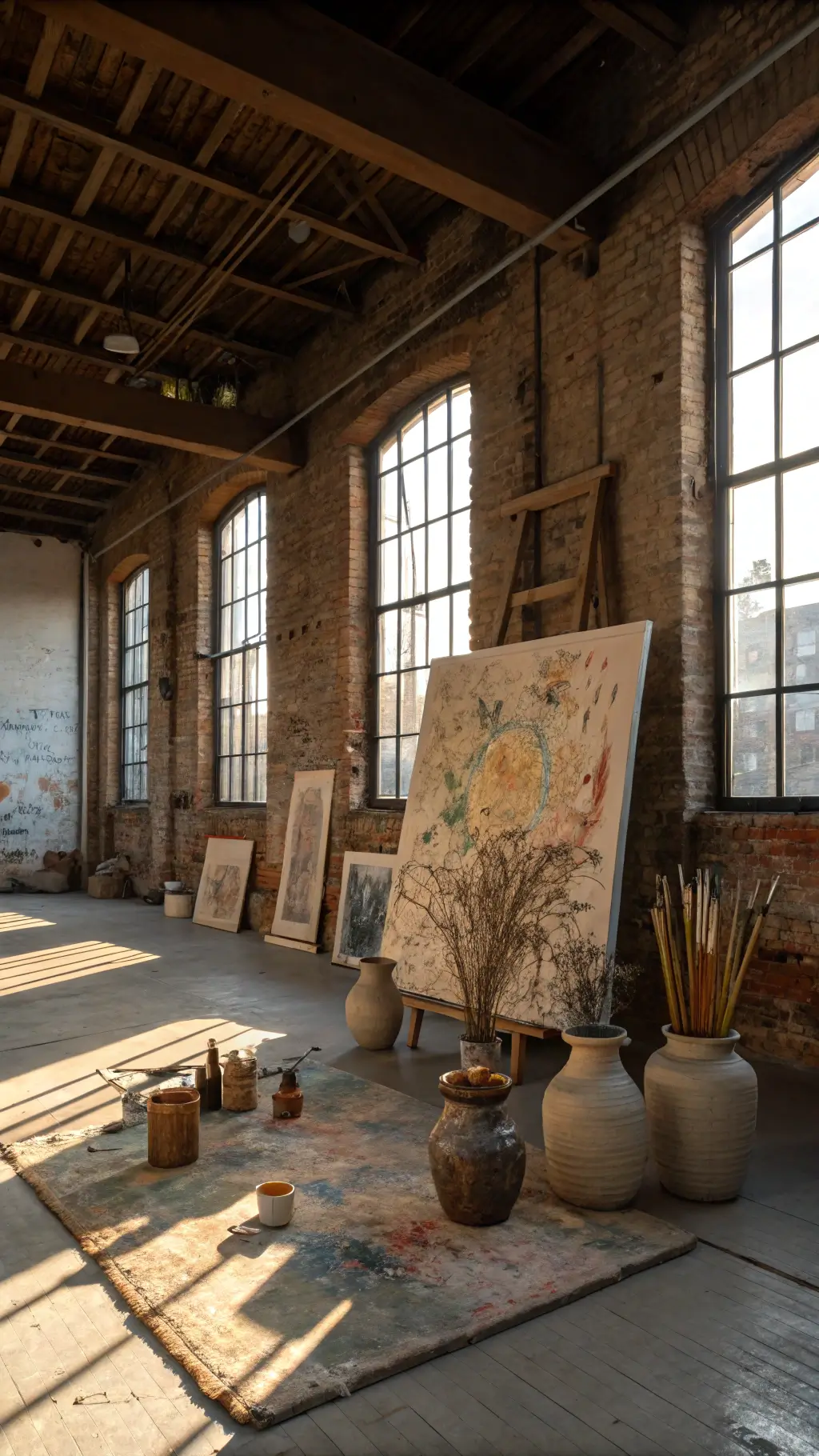
- Paint Color: Sherwin-Williams Accessible Beige SW 7036 – a warm, organic neutral that creates the perfect backdrop for wabi-sabi artwork with its natural undertones
- Furniture: reclaimed wood easel with visible grain patterns and natural imperfections
- Lighting: adjustable swing-arm task lamp with warm LED bulbs for painting detail work
- Materials: raw canvas, natural hemp rope, weathered wood frames, unglazed ceramic palettes
There’s something deeply liberating about wabi-sabi painting – it frees you from the pressure of perfection and invites you to find beauty in the unexpected. Your art studio becomes a sanctuary where imperfection is not just accepted, but celebrated.
Why Wabi-Sabi Matters in Art
I’ve spent years chasing perfect lines and flawless compositions, only to realize that true artistic magic happens when you let go. Wabi-sabi is about:
Shop for: Find Textured Paint on Amazon
- Celebrating Imperfection: Every “mistake” is a unique story
- Embracing Natural Decay: Beauty exists in weathered surfaces
- Finding Poetry in Simplicity: Less is truly more
Shop for: Find Neutral Wall Art on Amazon
🖼 Steal This Look
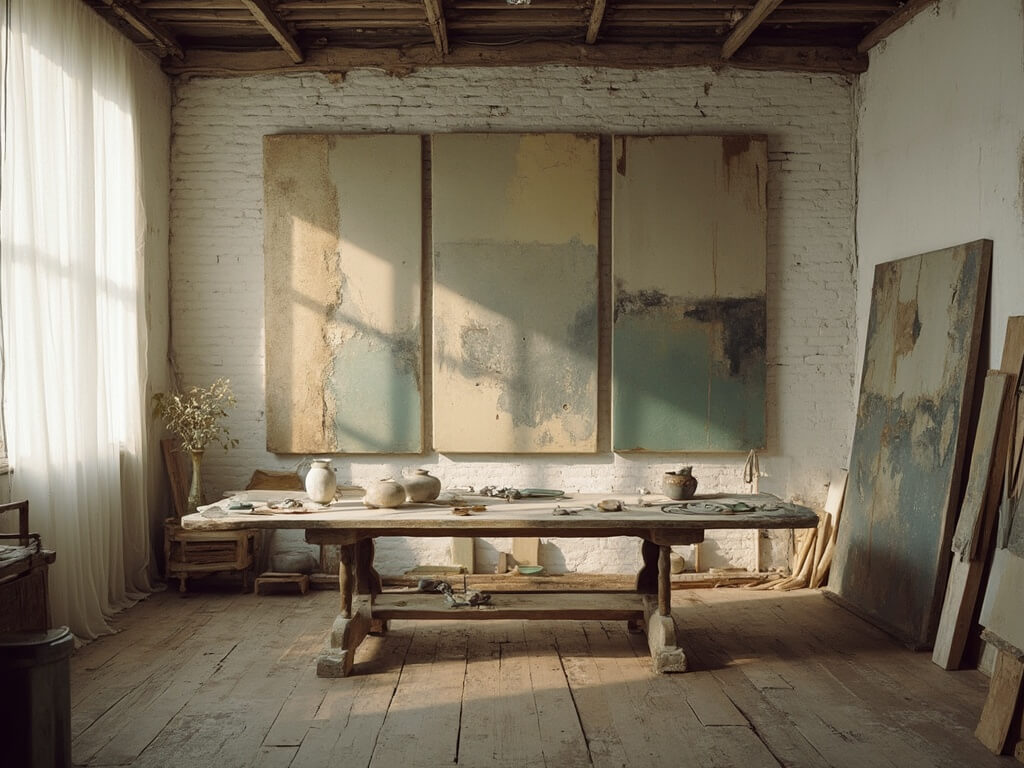
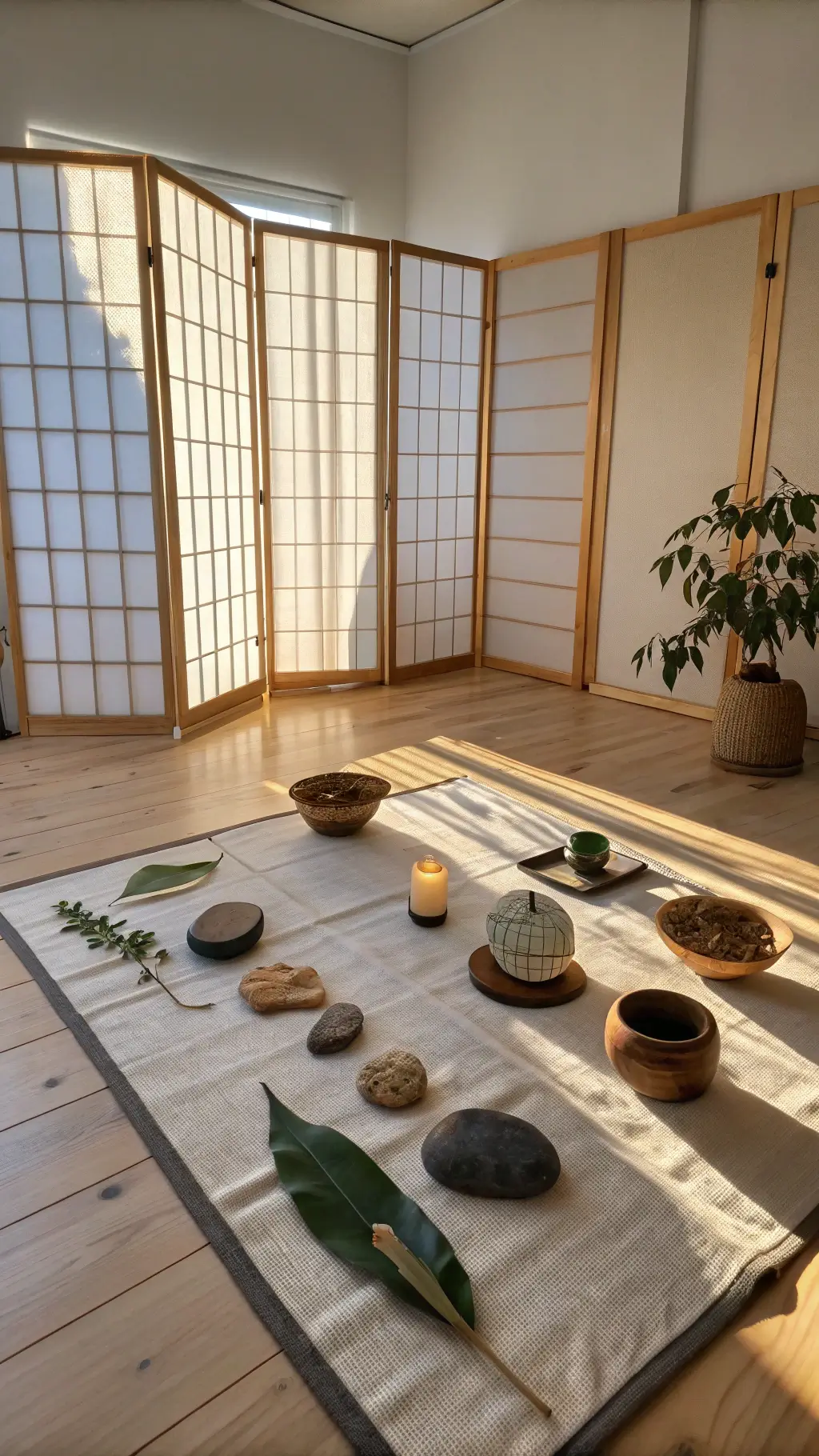
- Paint Color: Benjamin Moore Wrought Iron 2124-10 – deep charcoal that embraces the weathered, imperfect aesthetic of wabi-sabi art spaces
- Furniture: reclaimed wood easel with natural wear marks and vintage wooden art storage cabinet with aged patina
- Lighting: adjustable track lighting with warm Edison bulbs to highlight textural artwork without harsh shadows
- Materials: rough canvas, weathered wood frames, natural hemp rope, aged copper accents, and unfinished ceramic vessels
There’s something deeply liberating about creating an art space that celebrates the beauty of imperfection – those paint drips and uneven brush strokes become part of the story. I’ve found my most meaningful pieces emerge when I stop fighting the natural flow and embrace the organic chaos.
Core Principles of Wabi-Sabi Painting
1. Abandon Perfection
Forget everything you know about precise brushwork. In wabi-sabi:
Shop for: Find Minimalist Art Print on Amazon
- Uneven lines are welcome
- Asymmetry creates intrigue
- Rough edges tell a deeper narrative
Shop for: Find Earth Tone Paint on Amazon
2. Color Palette: Whispers of Nature
Choose colors that feel like a quiet morning:
Shop for: Find Japanese Wall Art on Amazon
- Soft earth browns
- Muted sage greens
- Gentle slate blues
- Weathered clay tones
Shop for: Find Natural Canvas Art on Amazon
🌟 Steal This Look
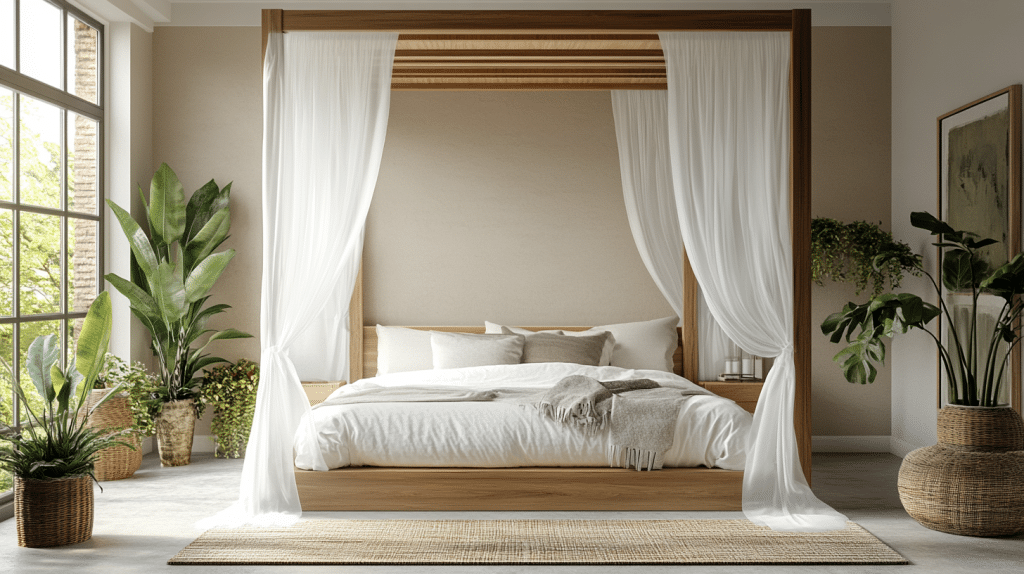
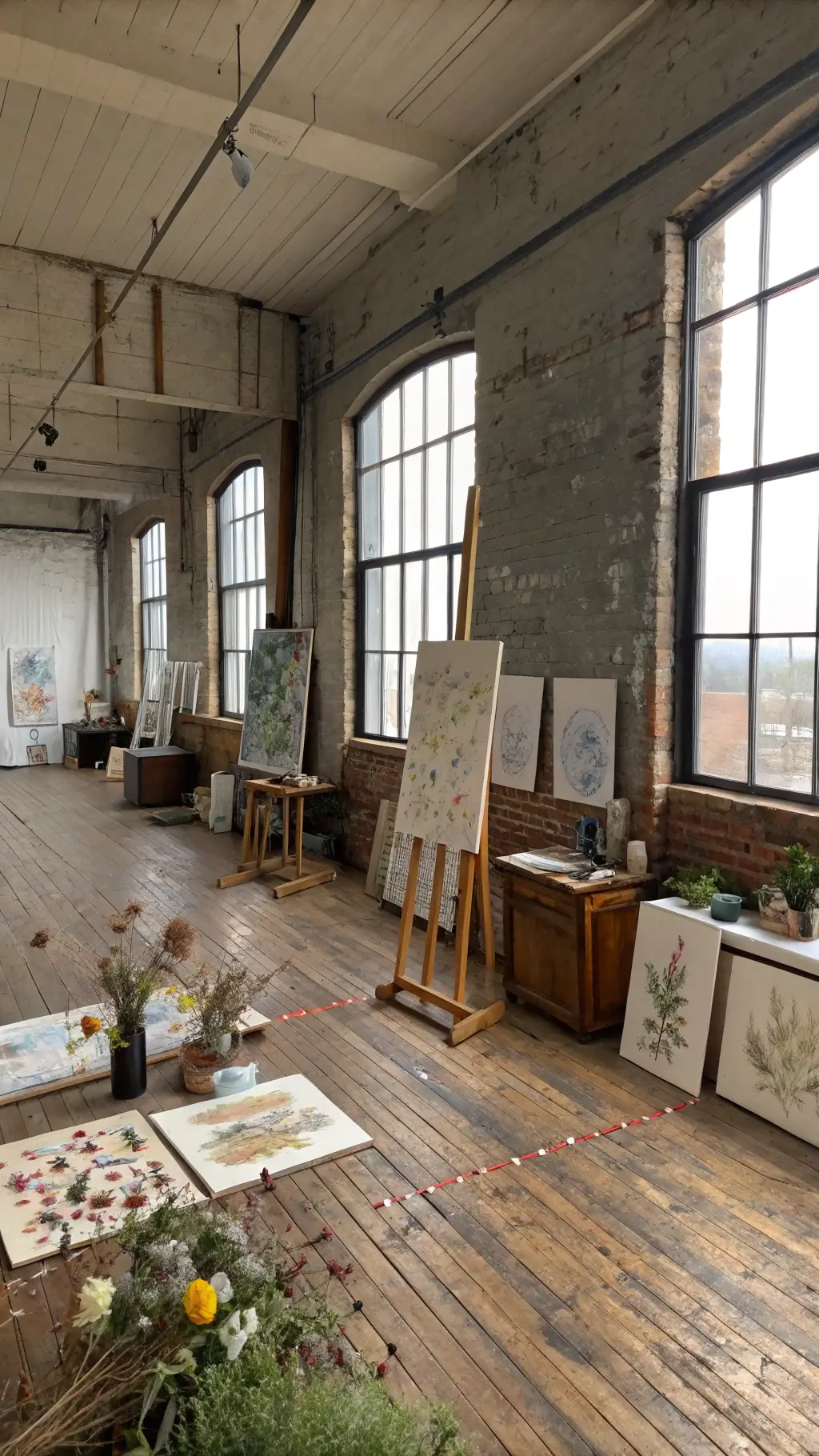
- Paint Color: Farrow & Ball Dead Salmon 28 for a weathered clay tone that embodies wabi-sabi’s embrace of imperfection and natural aging
- Furniture: low platform bed with weathered wood frame and linen upholstery showing natural texture variations
- Lighting: ceramic table lamp with irregular hand-thrown form and warm Edison bulb
- Materials: raw linen textiles, unfinished wood with visible grain, stone accents, and handmade ceramics with intentional imperfections
There’s something deeply meditative about embracing paint drips and uneven brushstrokes – it’s like giving yourself permission to find beauty in the unplanned moments. This philosophy transforms painting from a pursuit of perfection into a celebration of authentic, lived-in character.
Painting Techniques That Embody Wabi-Sabi
Minimalist Abstract Approach
- Use soft, overlapping color washes
- Leave intentional negative spaces
- Allow unexpected drips and streaks
Textured Surface Magic
- Mix acrylic with texture mediums
- Press natural objects into wet paint
- Embrace visible cracks and uneven layers
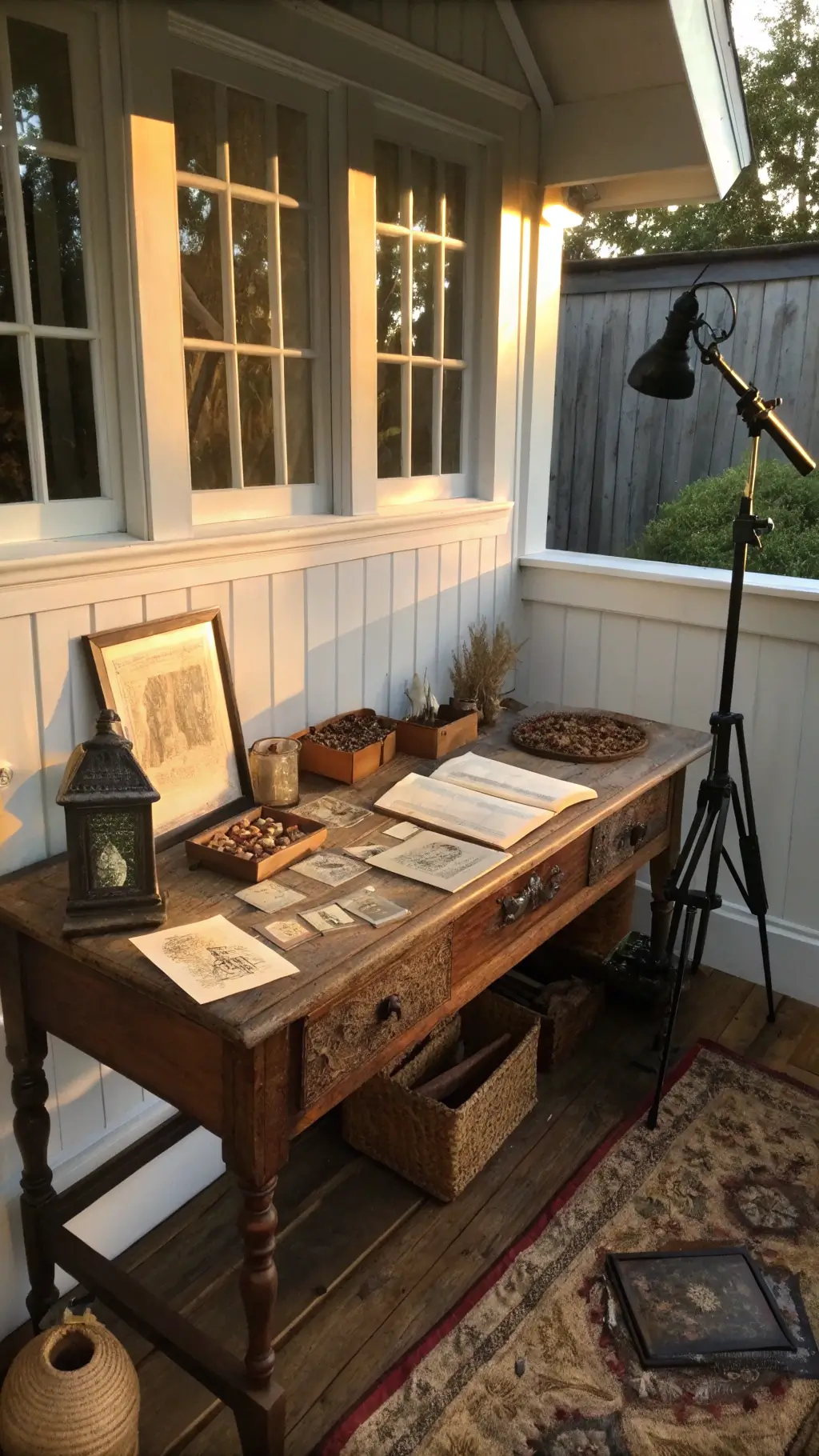
🏠 Steal This Look
- Paint Color: Behr Natural Linen PPU5-10 for base washes with Raw Umber N220-7 for depth layers
- Furniture: low-profile meditation cushions and simple wooden easel stand
- Lighting: adjustable clamp work light with daylight LED bulb
- Materials: natural canvas, hemp rope textures, and weathered wood accents
There’s something deeply meditative about letting paint flow naturally, embracing those happy accidents that make each piece uniquely imperfect. This technique connects you to the Japanese philosophy of finding beauty in life’s fleeting, imperfect moments.
Materials That Speak Softly
Recommended supplies:
- Acrylic paints
- Texture gels
- Natural objects (leaves, sand)
- Handmade papers
- Palette knives
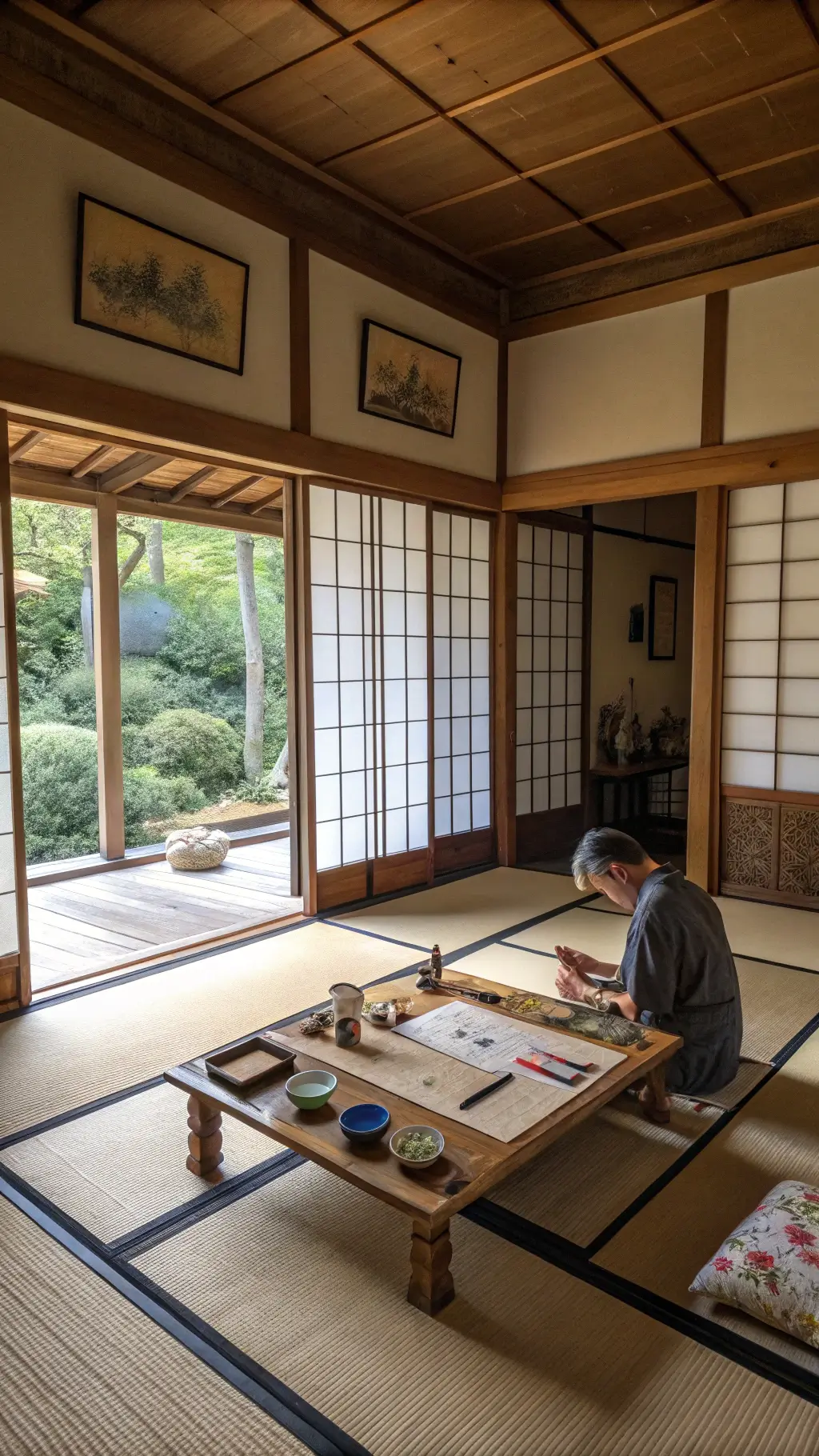
★ Steal This Look
- Paint Color: Valspar Weathered Gray 6003-2C – a soft, muted gray-beige that complements natural textures and wabi-sabi imperfections
- Furniture: low-profile wooden easel or artist table with visible wood grain and natural imperfections
- Lighting: adjustable desk lamp with warm LED bulbs for detailed painting work
- Materials: raw linen canvas, natural hemp rope, unfinished wood surfaces, and stone textures
There’s something deeply meditative about working with natural materials that carry their own stories – each leaf impression and sand texture becomes a quiet conversation between your art and nature’s imperfections.
Step-by-Step Wabi-Sabi Painting Process
- Prepare Your Canvas
- Choose a neutral, slightly rough surface
- Mix modeling paste with white paint
- Apply unevenly, creating natural texture
- Layer with Intention
- Use soft, translucent color washes
- Don’t blend too perfectly
- Let colors interact organically
- Add Organic Elements
- Press small stones into wet paint
- Sprinkle sand in corners
- Let natural materials become part of the artwork
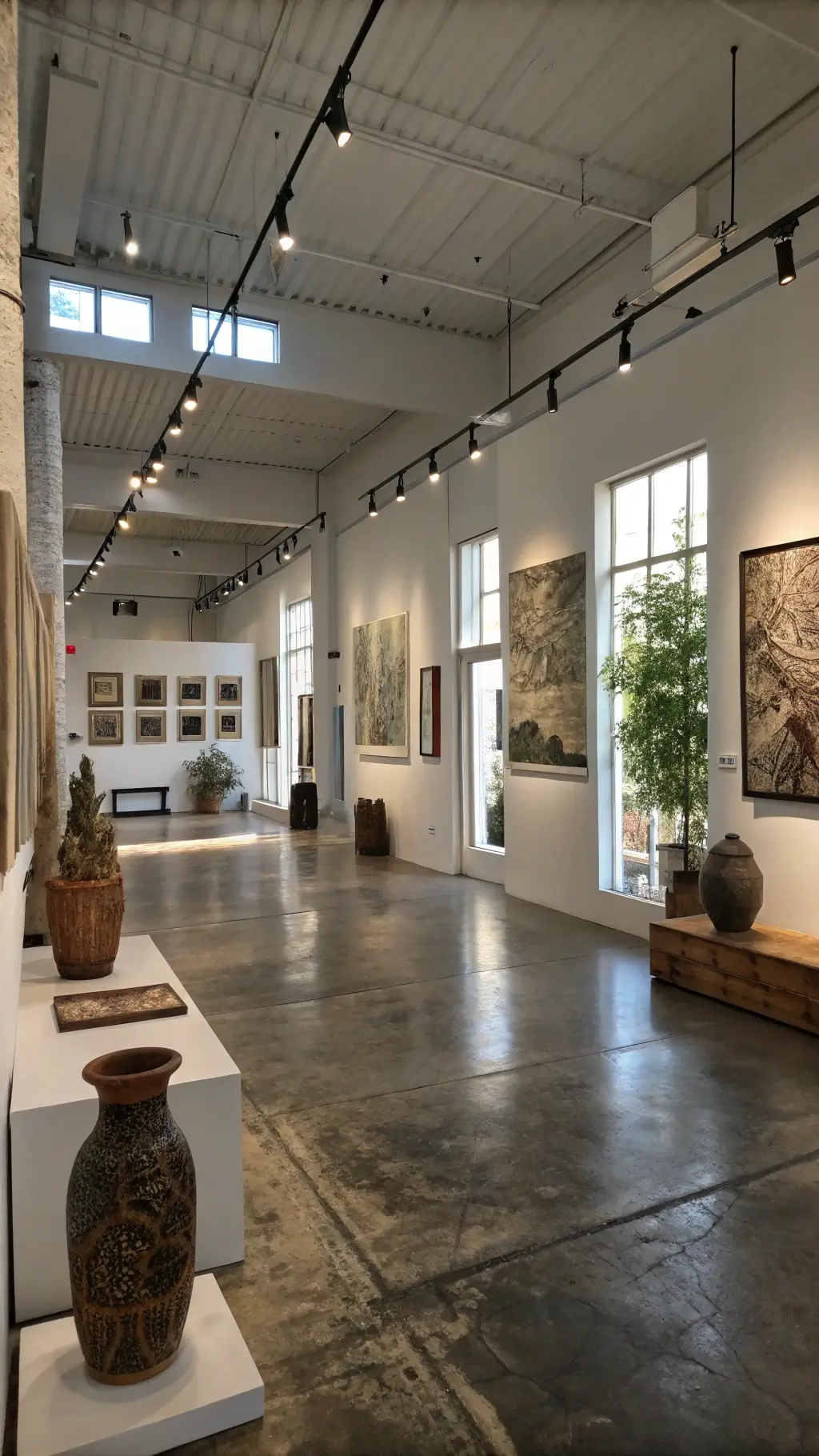
✎ Steal This Look
- Paint Color: PPG Oyster White PPG1012-1 for base layers with PPG Warm Stone PPG1032-4 for organic wash overlays
- Furniture: raw wood easel or rustic wooden work table with natural edge imperfections
- Lighting: adjustable natural daylight LED clamp lamp for color accuracy during painting process
- Materials: rough canvas texture, modeling paste buildup, organic sand and stone inclusions
There’s something deeply meditative about letting go of perfection and allowing the paint to flow naturally. This ancient Japanese aesthetic teaches us that the most beautiful art often emerges from embracing flaws rather than fighting them.
Common Mistakes to Avoid
- Over-Controlling: Let the painting evolve
- Chasing Perfection: Embrace unexpected results
- Forcing Technique: Stay intuitive and fluid
Inspiration Sources
Look to:
- Japanese zen gardens
- Weathered architectural surfaces
- Natural landscape transitions
- Aged ceramics and textiles
Pro Tips from My Journey
- Meditate before painting
- Work slowly and mindfully
- See beauty in impermanence
- Trust your intuitive process
Final Thoughts
Wabi-sabi painting is a conversation between you, your materials, and the universe’s beautiful imperfections. It’s not about creating a perfect image, but capturing a moment’s essence.
Your art doesn’t need to be flawless—it needs to be real.